
Commercial roofing knowledge for Texas building owners
Commercial roofing guides kept at their original paths. Off-topic archive posts stay unlinked from the default hub view.

Smart Roof Monitoring Systems: Remote Leak Detection for Commercial Roofs
Most commercial roof leaks are found by a tenant. A ceiling tile stains, someone sends a photo, and by then the water has usually been inside the roof for weeks. Smart roof monitoring tries to flip that order. Sensors watch the roof and report to you first. The technology is real and it works. It also has limits that sales pages rarely mention. This guide covers how remote leak detection works, which type fits which roof, what it cannot see, and when it is worth the money on a West Texas building.

ISO vs Polyiso Insulation for Commercial Flat Roofs: Same Board, Different Decisions
ISO and polyiso are the same insulation. "ISO" is roofer shorthand for polyisocyanurate, the rigid foam board under most commercial flat roofs in Texas. So the real question on your bid is not ISO or polyiso. The real questions are how thick it should be, which facer to use, how many layers, and what goes on top of it.

How Long Does Spray Foam Roofing Last? Real Lifespan Data for Texas Commercial Roofs
Most spray foam roofs that fail early in Texas do not fail because the foam wore out. They fail because the coating on top was never renewed. Here is how long an SPF roof really lasts, what the field research shows, and what decides whether yours makes it to 15 years or 40.

Parapet Wall Waterproofing for Texas Commercial Buildings: What Holds and What Leaks
On most flat commercial roofs in Texas, the parapet is the most exposed wall on the building. It takes wind on both faces, hail on top, and sun that bakes one side while the other sits in shade. When water gets past it, the stain rarely shows up where the water went in. Here is how parapet walls stay dry, where they fail first, and how to decide between a repair and a rebuild.
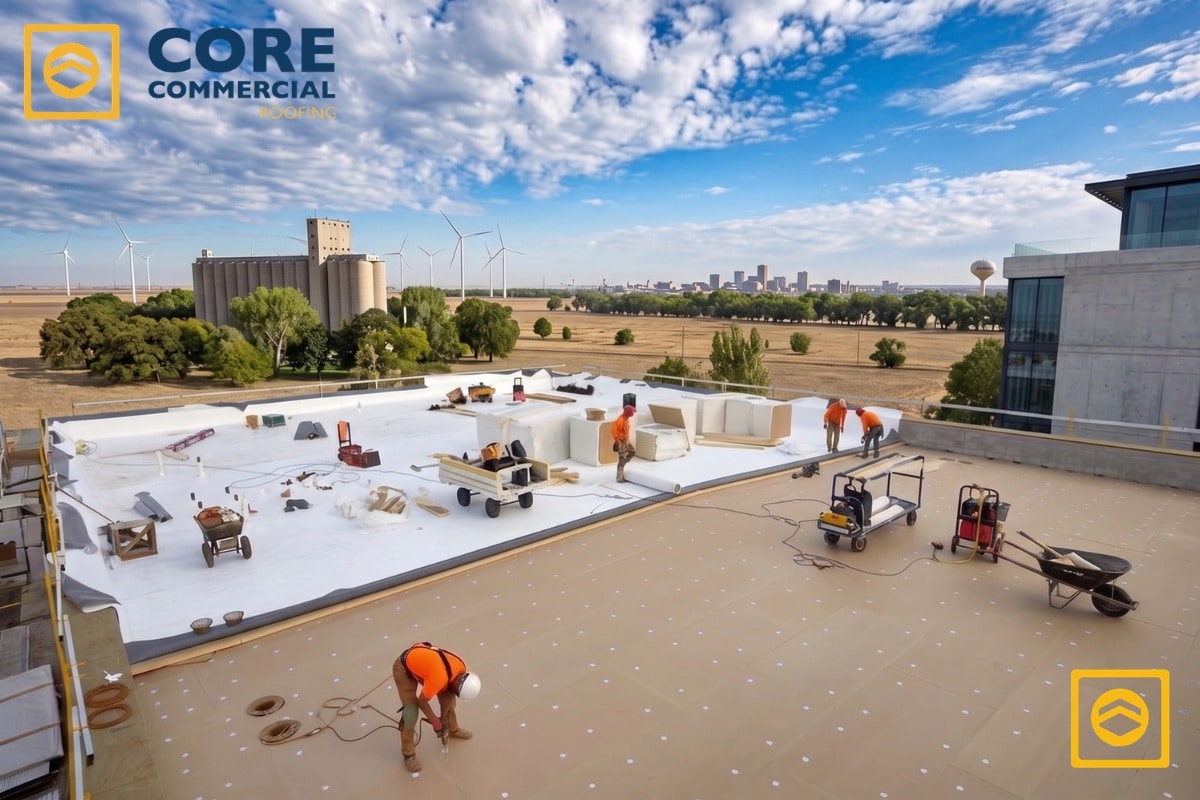
Built-Up Roofing (BUR) Systems: Is It Still a Good Option in 2026?
Built-up roofing still belongs on heavy Texas buildings that carry rooftop traffic and hail, but most 2026 re-roofs are better served by modified bitumen or single-ply. See how deck load, energy code, and gravel hail performance decide whether to repair, recover, or replace a tar-and-gravel roof.
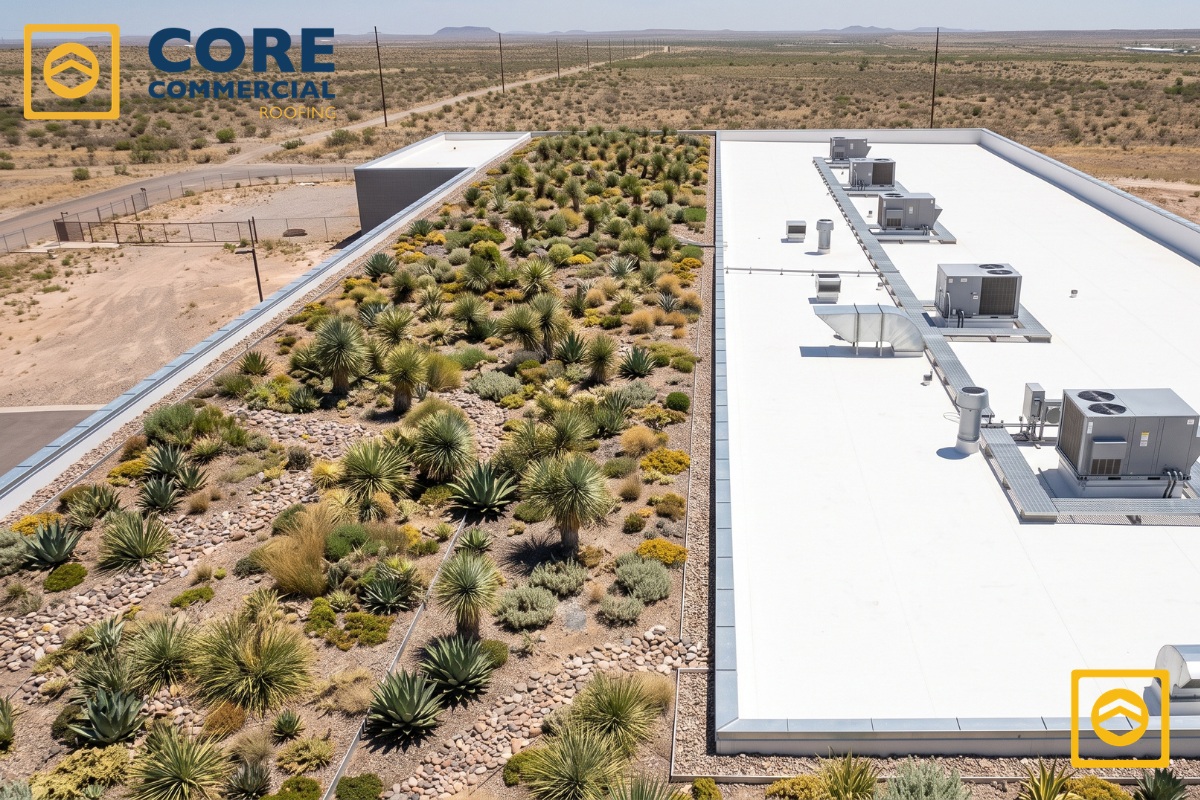
Green and Vegetative Roofs on Texas Commercial Buildings: What Actually Works Here
A vegetative roof in Texas has to stay watertight through triple-digit heat, drought, wind, and hail. Learn which plants survive here, what the structure must carry, and when a white reflective membrane is the smarter commercial roof.
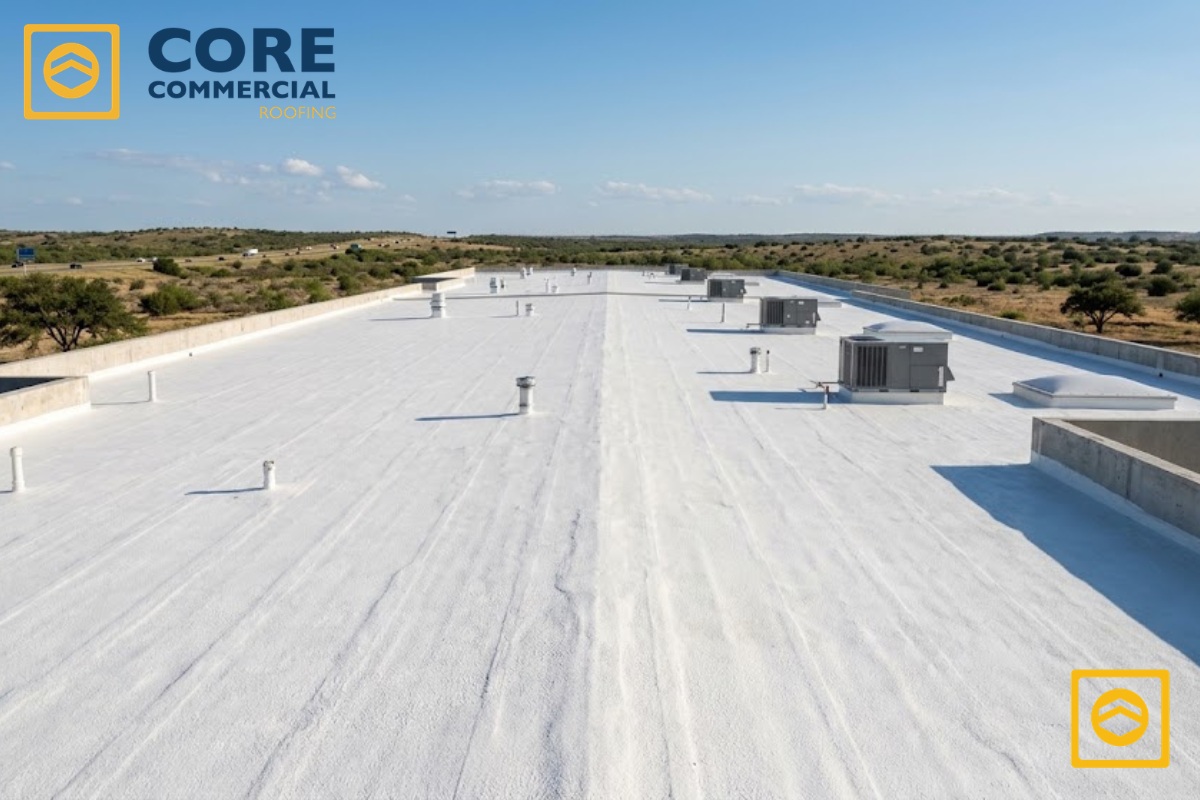
Spray Polyurethane Foam (SPF) Roofing in Texas: A Complete Guide
Spray polyurethane foam waterproofs and insulates in one layer, which changes cooling load, energy-code compliance, and hail recovery on a Texas commercial roof. Check thickness, R-value, wind, ponding, and recover rules before you specify SPF.
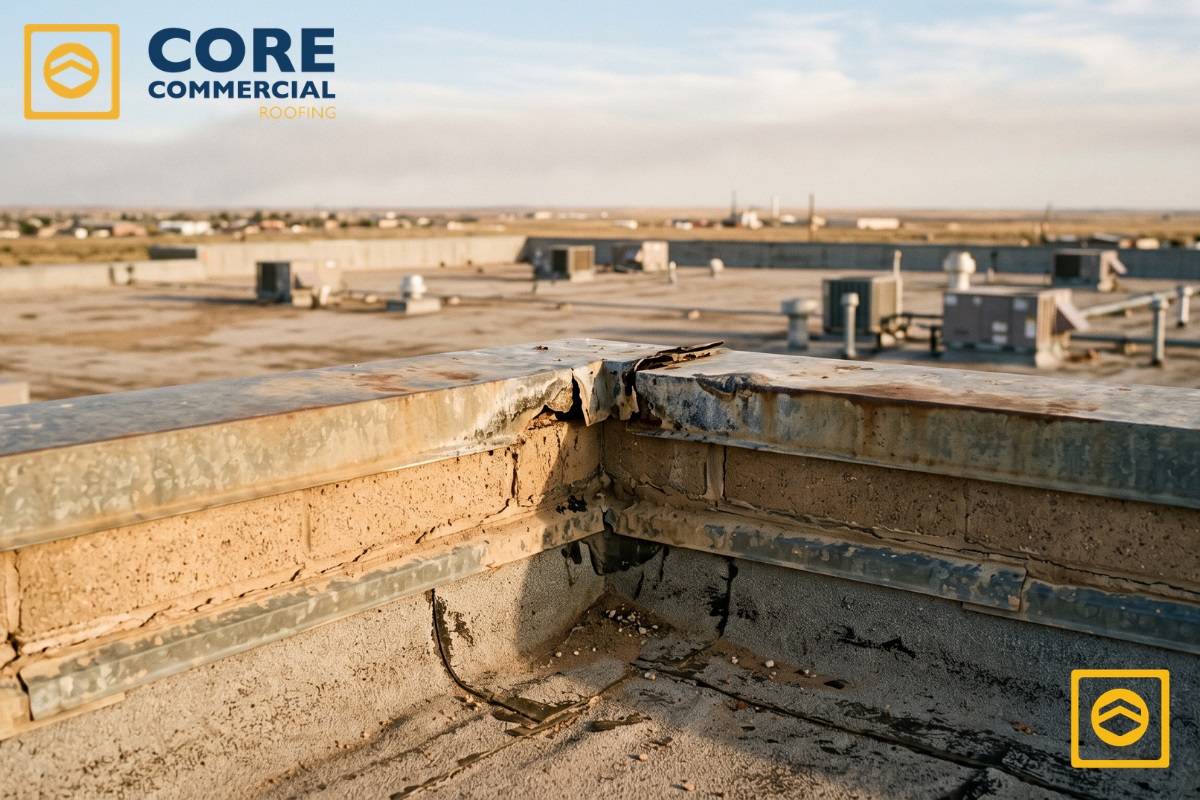
Commercial roof flashing: types, common failures, and repair guide
Most Texas commercial roof leaks start at parapets, walls, equipment curbs, and edge metal, not in the field of the membrane. This repair guide covers base flashing, counterflashing, coping, and the failures that return after hail and heat.
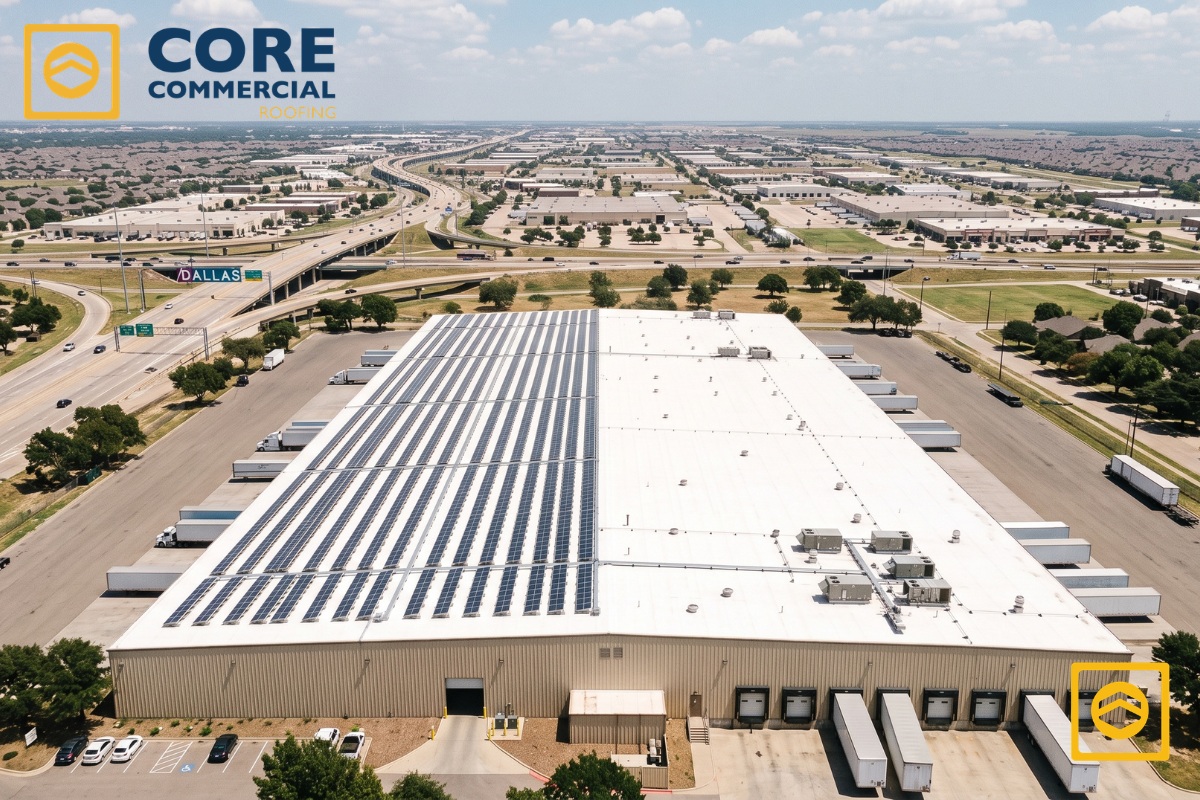
Can You Install Solar Panels on a Commercial Flat Roof?
Solar arrays can go on TPO, PVC, EPDM, and modified bitumen flat roofs with ballasted or mechanically attached racking. The harder question is whether the commercial roof will last the 25-year life of the array without a tear-off under the panels.
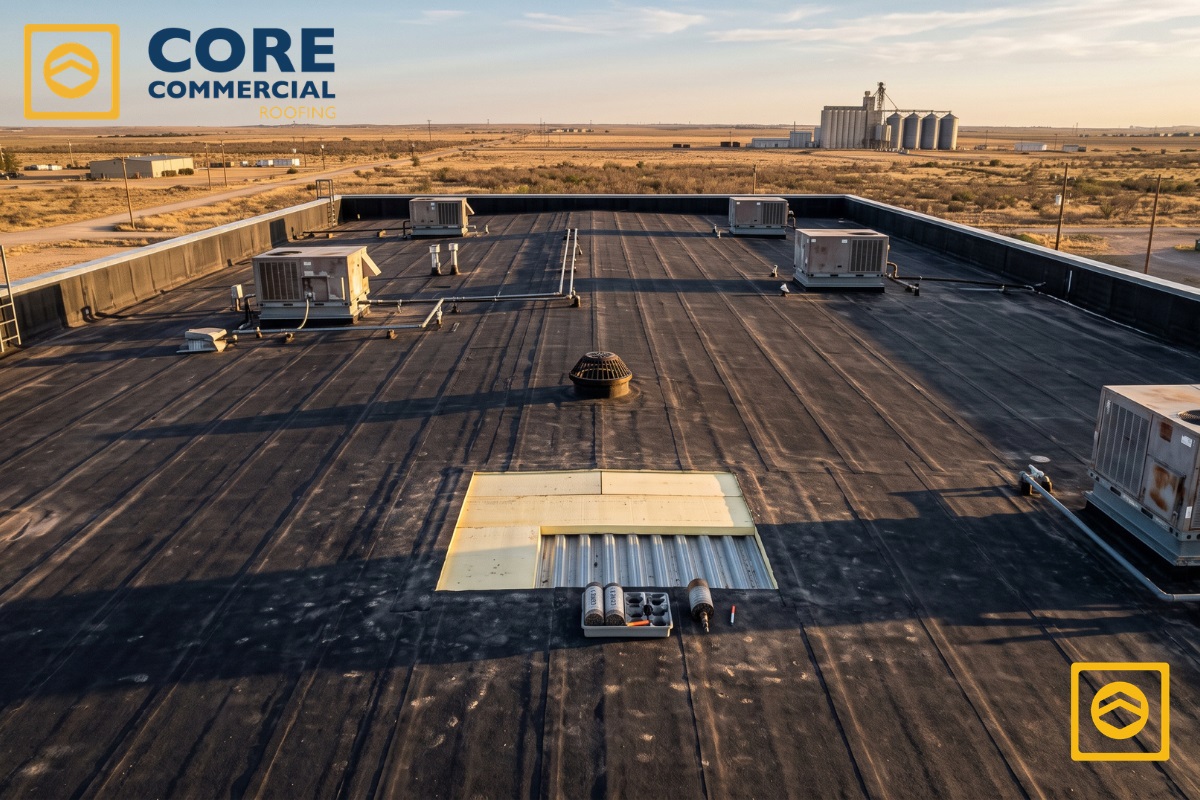
EPDM Roof Repair vs Replacement: How to Tell Which One Your Building Needs
Patch or tear off an EPDM roof in Lubbock? The answer comes from wet insulation, how widespread the failures are, how many layers sit on the deck, and what code requires once you replace. Measure those four things before you accept a six-figure quote.
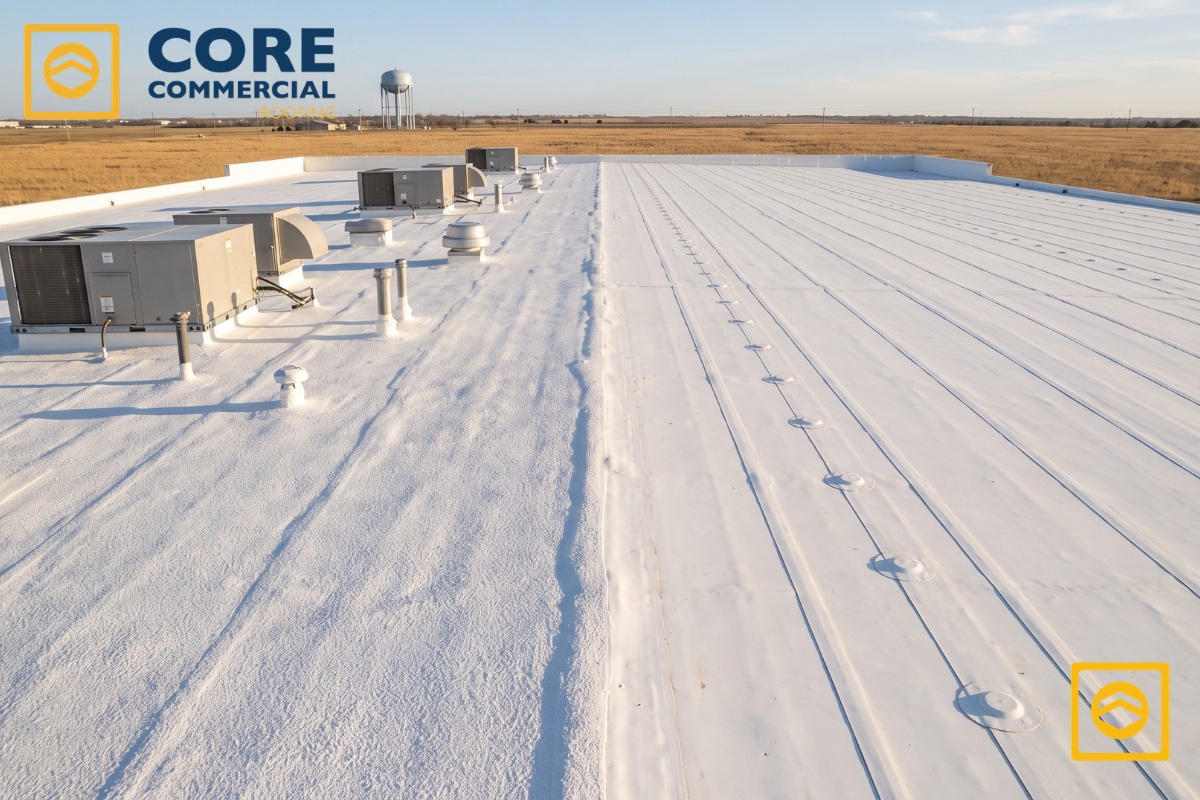
SPF Roofing vs TPO: Which Is Better for Commercial Roofs in Texas?
Spray foam and TPO both work on Texas commercial roofs, and they fail for different reasons. Compare hail performance, heat, 30-year cost, ponding, and recover options so the system matches the building.
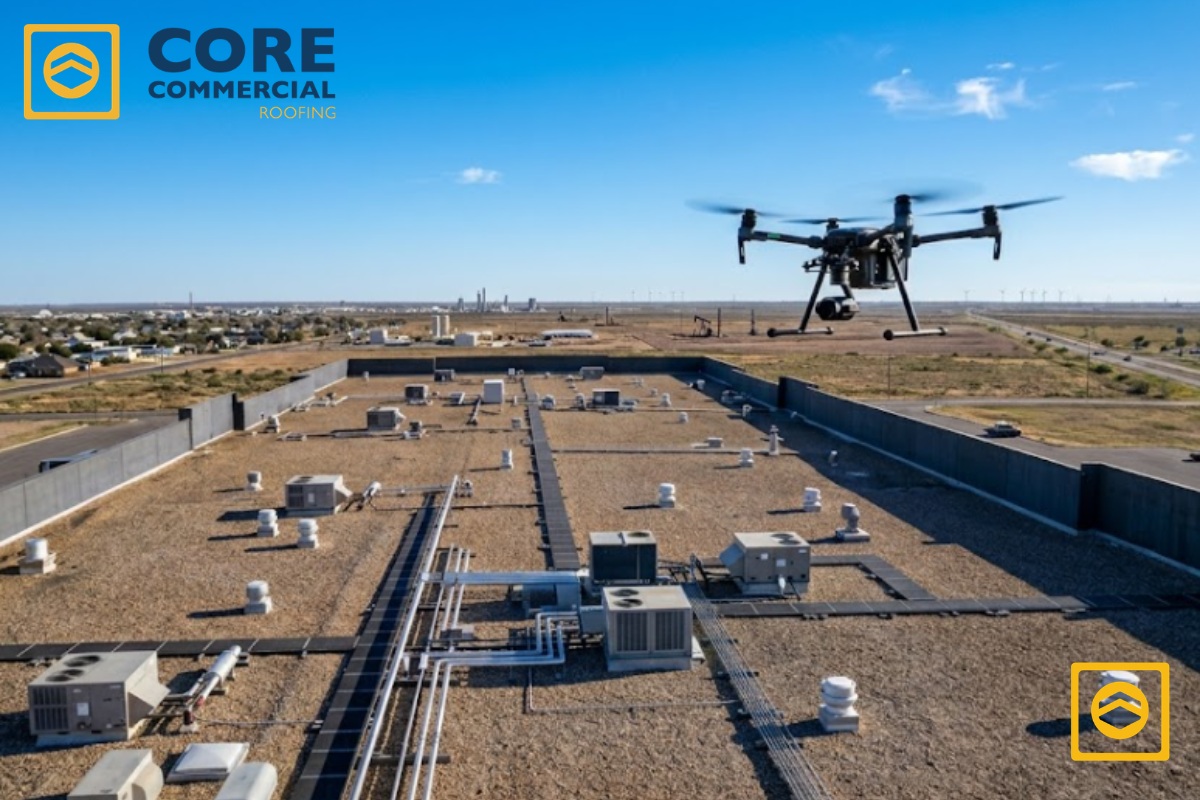
How Drone Roof Inspections Work for Texas Commercial Properties
Drone roof inspections pair high-resolution photos with infrared scans so West Texas property managers can document hail and moisture without walking the membrane. See how a flight works, what Texas law allows, what it costs, and how often to schedule one.